Celebrate the Fourth with Steuben Eagles
Jul 1, 2026
Issue 3788
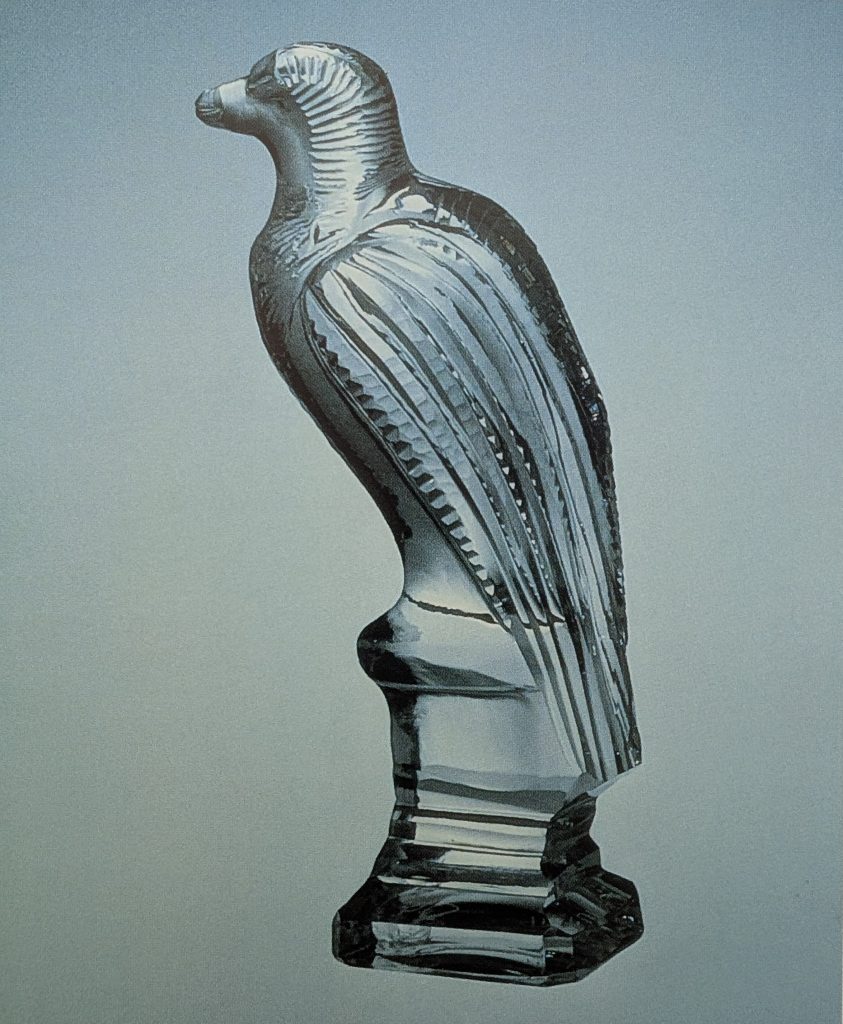
In 2003, as part of Steuben’s centennial celebration, Corning historian and Steuben scholar Thomas P. Dimitroff wrote a series of articles for The Corning Leader reflecting on the artistry of Steuben Glass. Tom generously shared these essays with the Carder Steuben Glass Association, and nine are now available on our website. This issue highlights his article, “Eagles,” originally published on August 24, 2003.
Dimitroff compares two striking Steuben eagle sculptures—Frederick Carder’s majestic cut crystal eagle and a later eagle designed by Donald Pollard during the Arthur Houghton era. Although created decades apart, both were molded and then intricately cut, demonstrating Steuben’s continued mastery of glass craftsmanship.
Carder’s eagle is particularly noteworthy because it challenges two long-held assumptions about his work: that he disliked colorless glass and brilliant cutting. While Carder was passionate about richly colored art glass, his unpublished manuscript Glass and Glass Making as I Know It reveals a more nuanced view of cut glass. He admired well-designed cutting that enhanced a form but criticized pieces that were “cut all over,” believing excessive cutting obscured the design and diminished its beauty.
According to fellow glassmaker Otto Hilbert, Carder’s preference for colored glass stemmed from his early years at Stevens & Williams, where colorless cut glass dominated production. Carder helped reintroduce color to the firm’s wares, a move that contributed significantly to its success. He carried that philosophy to Steuben in 1903, making brilliantly colored art glass the company’s hallmark. When Steuben shifted its emphasis to colorless crystal in 1932, Carder regarded it as the beginning of the end of his influence at the company.
Carder’s cut eagle remained in Steuben’s line well into the 1930s and served not only as a standalone sculpture but also as part of lamps and center bowl pedestals. Along with his pheasant, peacock, pigeon, duck, and Pegasus, it reflects his lifelong inspiration from nature.
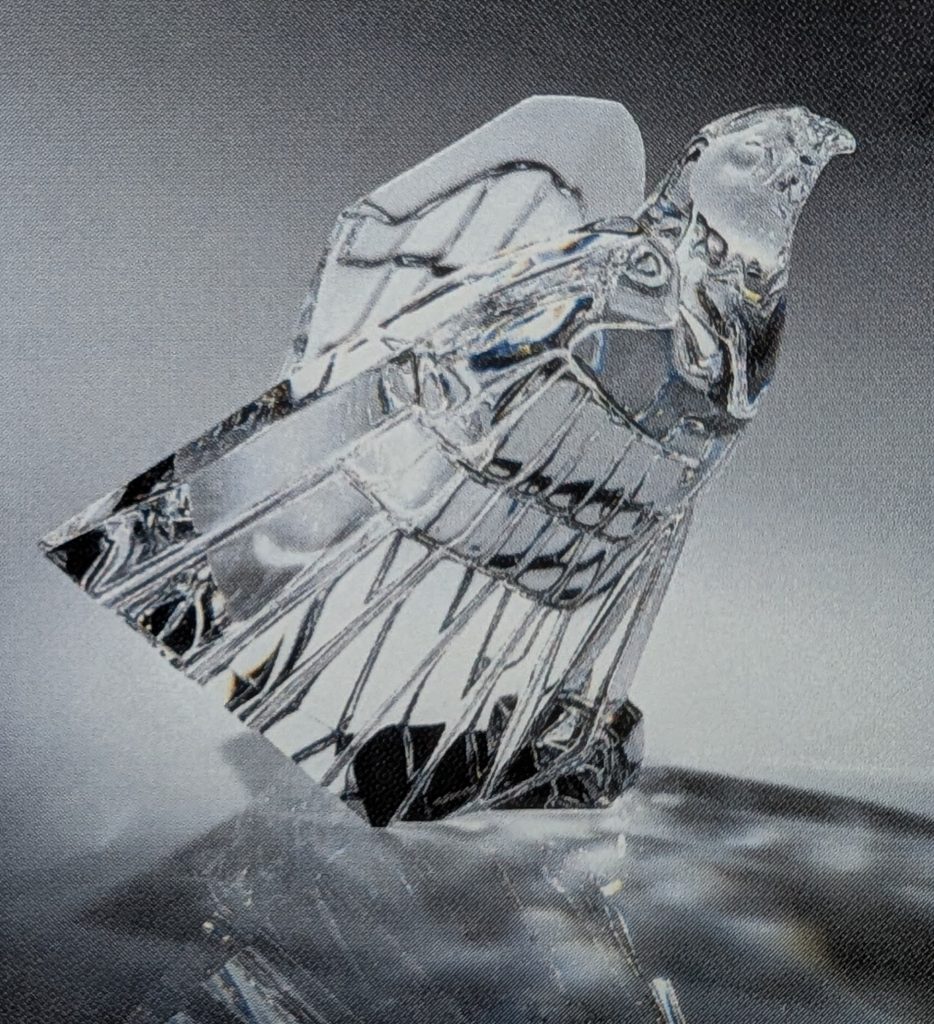
Dimitroff then turns to Donald Pollard’s American Eagle, introduced in 1975. Pollard’s sculpture, with its clean, crisp lines and commanding presence, reflects a modern interpretation of the nation’s emblem while retaining the strength and dignity associated with the bald eagle. The design remains one of Steuben’s enduring classics and has found homes in distinguished collections around the world, including those of King Juan Carlos I and Queen Sofía of Spain.
The eagle has long occupied a special place in American history. Adopted as the national emblem in the late eighteenth century, it has inspired artists and designers for generations. Steuben alone has produced more than fifty eagle-themed designs, including numerous works featuring the eagle as part of the Presidential Seal and the Great Seal of the United States.
Pollard, who served as a Steuben designer from 1950 to 1980, brought a diverse artistic background to the company, having studied at the Rhode Island School of Design, worked in theatrical and architectural design, and served in the U.S. Navy during World War II. Upon his retirement in 1981, Steuben honored his remarkable career with a retrospective exhibition centered on his masterpiece, Crown of Oberon.
Through these two remarkable sculptures, Dimitroff illustrates how both Frederick Carder and Donald Pollard interpreted the eagle in distinctly different ways, each creating a lasting symbol of strength, freedom, and artistic excellence that continues to represent the finest traditions of Steuben Glass.
SAVE THE DATE

The * 25th * Annual Carder Steuben Symposium will be held on September 18-19, 2026 in Corning, New York. Blocks of hotel rooms with special negotiated rates have been finalized; make your hotel reservation today!
SEEKING DONATIONS

We are collecting items for our annual fundraising auction that will be held during the Symposium Banquet in September. All proceeds from the auction benefit the Carder Steuben Glass Association and help to support our mission.
You can help support the CSGA by donating or consigning Carder Steuben glass, post-Carder Steuben glass, glass from the same era, or glass with relevance to Corning. Other items like books, New York state wine, event tickets, or Frederick Carder items also make great auction entries. If you are interested in supporting our organization in this way, please send item descriptions to Karen Beeman at [email protected]. You can bring your donations to the Symposium or ship them in advance to: CSGA c/o S. Coots, 14681 Lakeshore Rd., Kent, NY 14477.
The Carder Steuben Glass Association is a 501(c)(3) charitable organization and you will receive a tax receipt for your donation. Thank you in advance for your support!
HAPPY CANADA DAY
Wishing all of our northern members a very happy Canada Day today!
Gazelle Gazette Archive



Carder Steuben Glass Association
22-23 September 2027