Chrysalis
Apr 6, 2026
Issue 3783
In 2003, as part of the centennial celebration of Steuben Glass, Corning historian and noted Steuben expert Thomas P. Dimitroff authored a series of articles for The Corning Leader. These thoughtful essays offered a retrospective look at Steuben across the decades, drawing insightful comparisons between the eras of Frederick Carder and Arthur Houghton.
Tom generously shared nine of these articles with our organization, and they are now available for viewing on our website. This issue of the Gazette highlights the fourth article in the series, dated July 13, 2003, in which Tom juxtaposes two very different, but equally compelling renditions of butterflies.
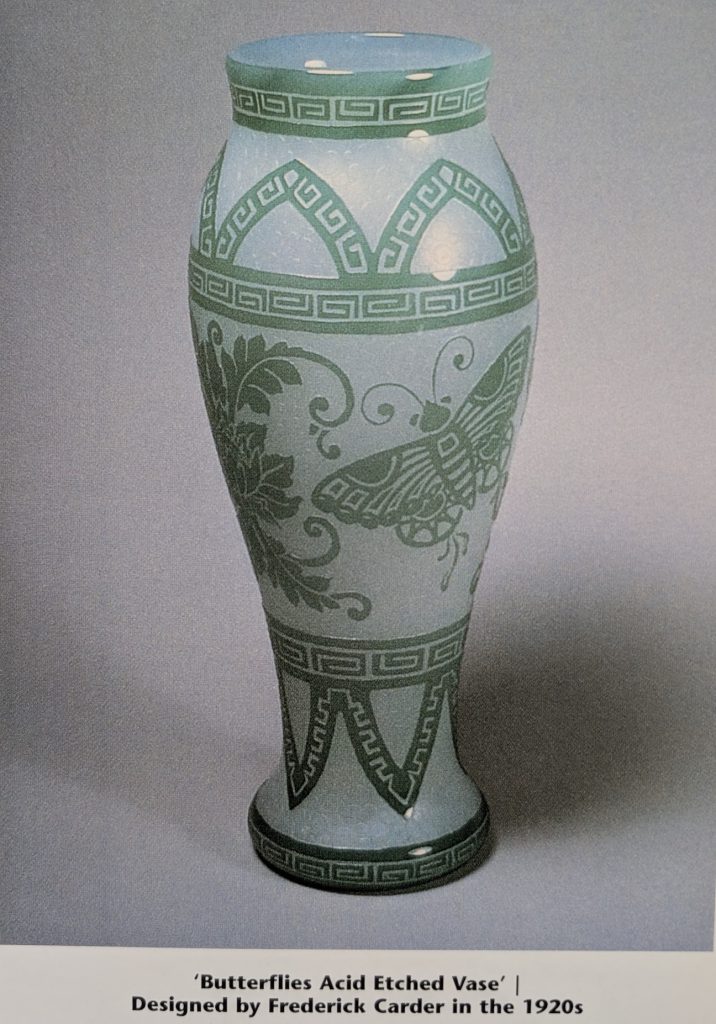
Tom has once again chosen an acid cut back vase that demonstrates Carder’s deep appreciation for nature and color. In this example, green jade is layered over alabaster. After the alabaster vase is cased in green jade, a design is applied using an acid-resistant material composed of asphaltum, beeswax, gum, mastic, and turpentine. The vase is then immersed in hydrofluoric acid, which removes the unprotected areas of the green jade and reveals the alabaster beneath.
The resulting design features stylized Art Deco plant forms and a butterfly, combining imagery drawn from nature with a rich green hue applied to a classic vase shape. This piece, shape number 6535, is highly controlled and symmetrical. Additional classical influences include the repeated use of a Greek key motif and stylized acanthus leaf forms.
As a side note, in the city of Corning, a former alley was renamed Jade Lane in reference to this type of glass. There is also an Alabaster Lane in Corning. I think Tom Dimitroff played a role in the naming of these lanes!
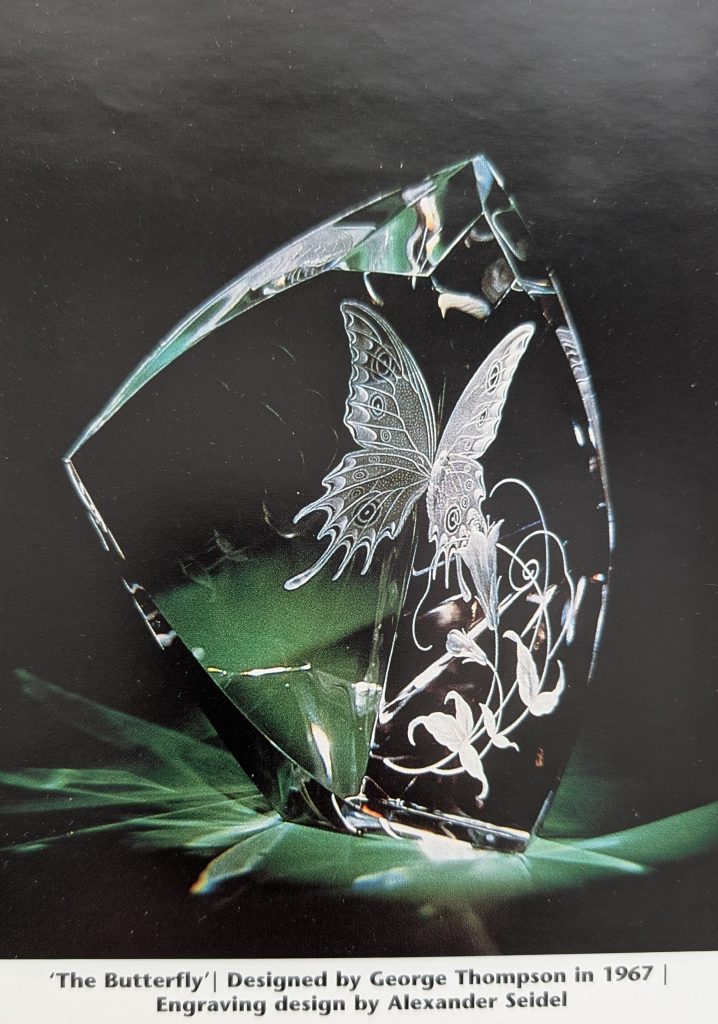
For this article, Tom Dimitroff selected “The Butterfly” as the representative piece from the Houghton era. In the years following Frederick Carder’s tenure, several Steuben designers continued to explore Carder’s fascination with butterflies. Notable examples from this period include Butterfly Girl, Moth and Flame, The Butterfly, Garden of Delight, and Butterflies Necklace.
Dimitroff noted that designer George Thompson drew his inspiration for The Butterfly from oriental beads. Well aware of the remarkable optical qualities of Steuben glass, Thompson envisioned a prism cut with precisely angled planes that would reflect a single engraved butterfly wing. The effect presents a complete butterfly whose wings appear to open and close as the viewer moves around the piece. The flawless clarity of the crystal allows the butterfly to seem suspended effortlessly above delicately engraved foliage.
George Thompson joined the Steuben Design Department when it was established in 1936. Over the course of a distinguished career, he created numerous Steuben designs in a wide range of forms. His work appeared in every Steuben exhibition from 1937 until his retirement in 1974. Today, Thompson’s designs are represented in the collections of major museums and galleries around the world, underscoring his lasting contribution to Steuben’s legacy.
Gazelle Gazette Archive




Carder Steuben Glass Association
18-19 September 2026