Carder Brothers and the Wordsley School of Art
Feb 23, 2026
Issue 3779
James Measell delivered an engaging and informative presentation on the contributions of Frederick and George Carder to glassmaking and the Wordsley School of Art at last year’s Symposium. The Carder brothers—Frederick Carder (1863-1963) and George J. Carder (1868-1953)—are closely linked with the life and progress of the Wordsley School of Art, most notably as the school achieved and maintained its reputation for excellence in courses of instruction pertaining to glass and trained students who had careers in the glass industry. As art master at Wordsley, the elder Carder established a foundation that was carried forward by George J. Carder after his brother immigrated to the United States in 1903 to become associated with the Steuben Glass Works. He outlined the educational backgrounds of both brothers and how they and the Wordsley School of Art developed together. Both brothers were recognized for their achievements through multiple awards. James shared many interesting aspects of Frederick Carder and his brother George that create a better picture of their life in England, and also how hard they worked and studied.
James highlighted the role of the City and Guilds of London Institute, where young men who were trained in various crafts sought to pass examinations to practice professionally. Frederick Carder received several prestigious awards including:
- 1885 – Award for designs for wall decorations
- 1886 – Award for designs for glass and terracotta
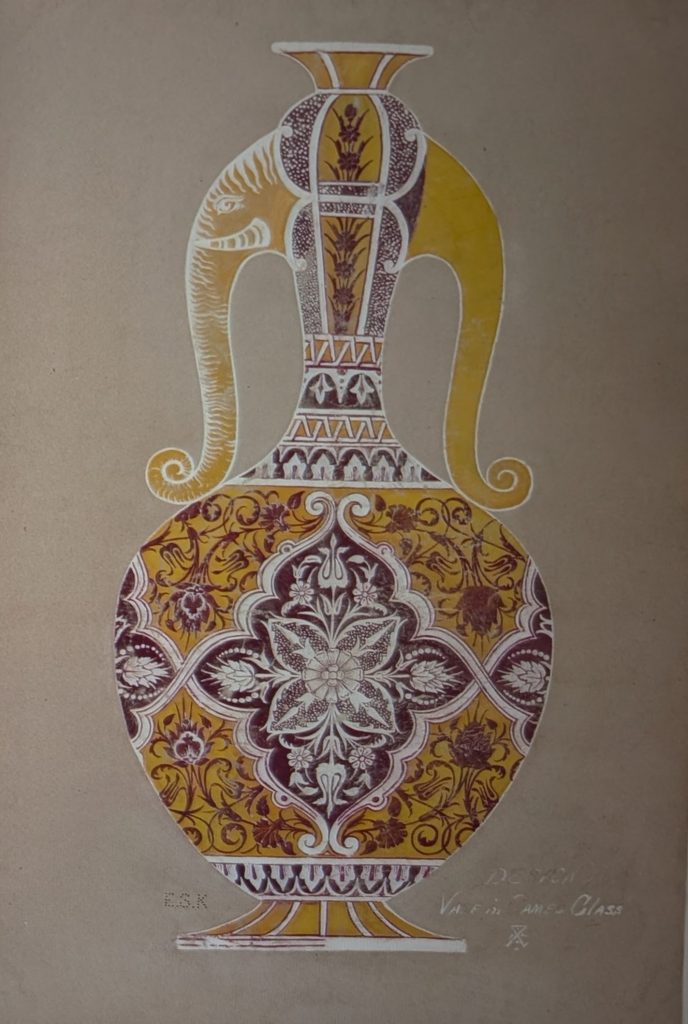
- 1888 – National Silver Medal for his Cupid and Psyche design in wax for a cameo glass vase
- 1889 – National Gold Medal for The Muses, another wax design for cameo glass
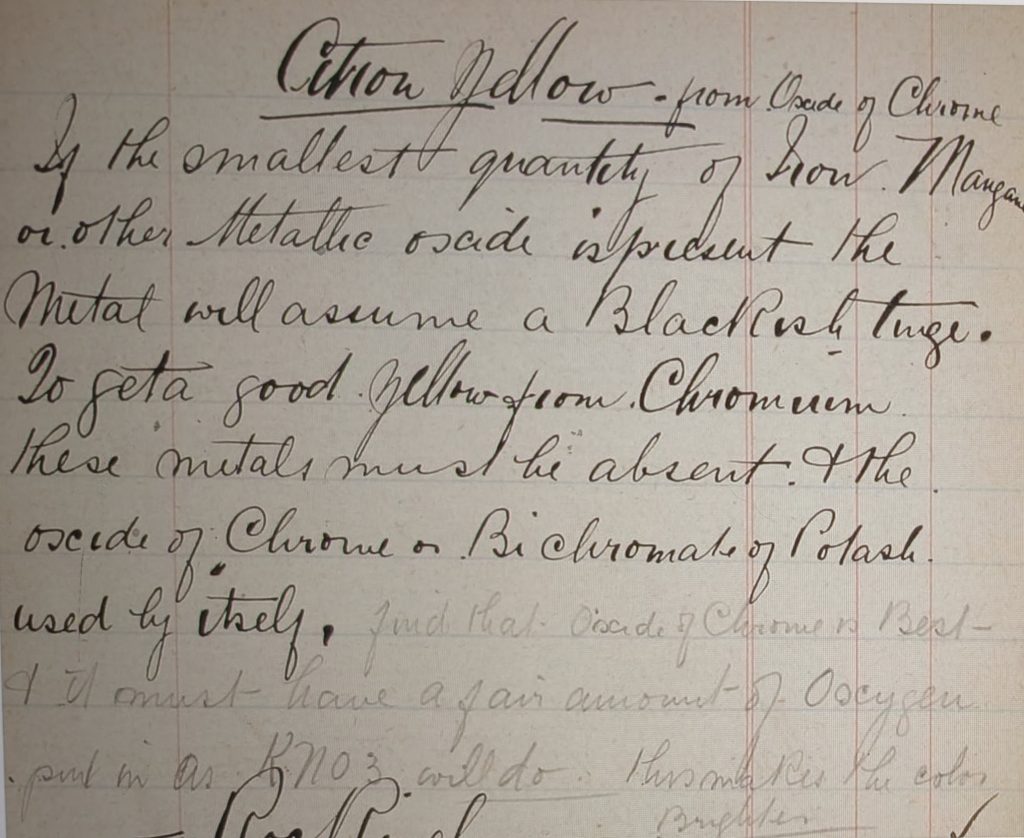
James showed Fred Carder’s blending of science and artistic abilities early in his career. Here are notes from a Carder’s notebook ca. 1888, (from the Rakow), on the color Citron Yellow.
Citron Yellow from Oxide of Chrome
If the smallest quantity of Iron Manganese or other Metallic oxide is present the Metal will assume a Blackish tinge. To get a good yellow from Chromium these metals must be absent & the oxide of Chrome or Bichromate of Potash used by itself. Find that Oxide of Chrome is Best & it must have a fair amount of Oxygen put in as KNO3 will do. This makes the color brighter.
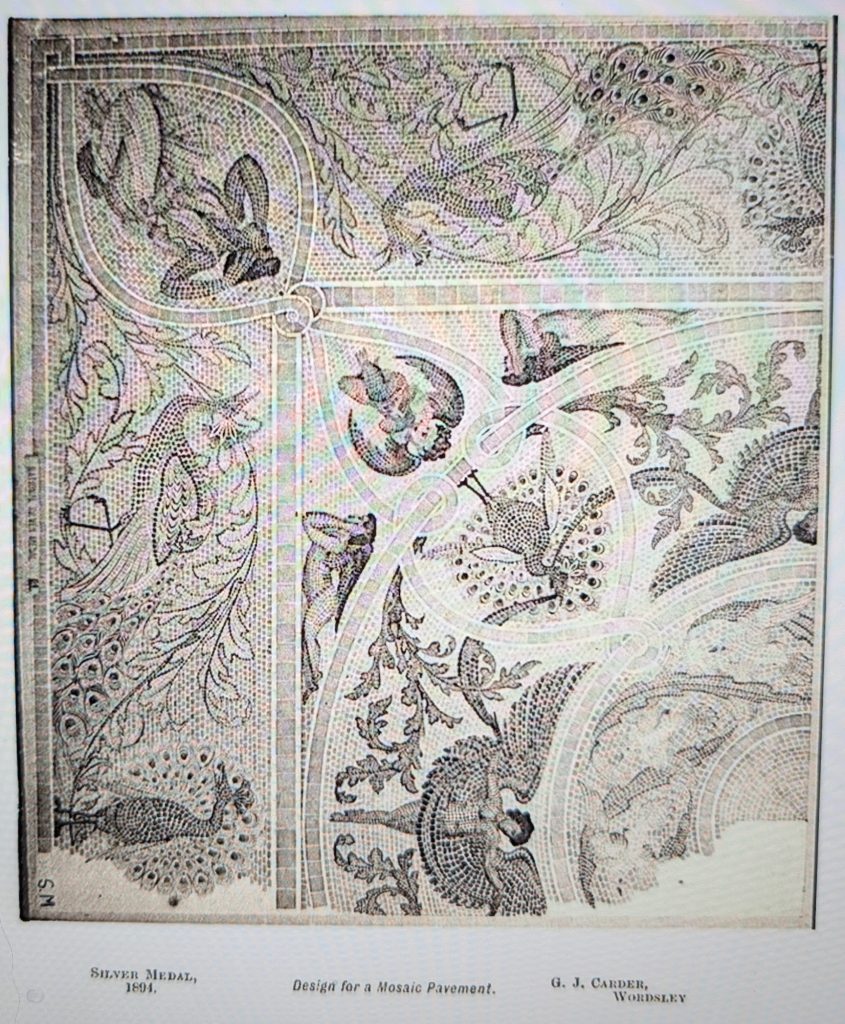
George Carder also earned notable recognition for his own artistic talents, winning:
- 1894 – National Silver Medal for mosaic pavement design
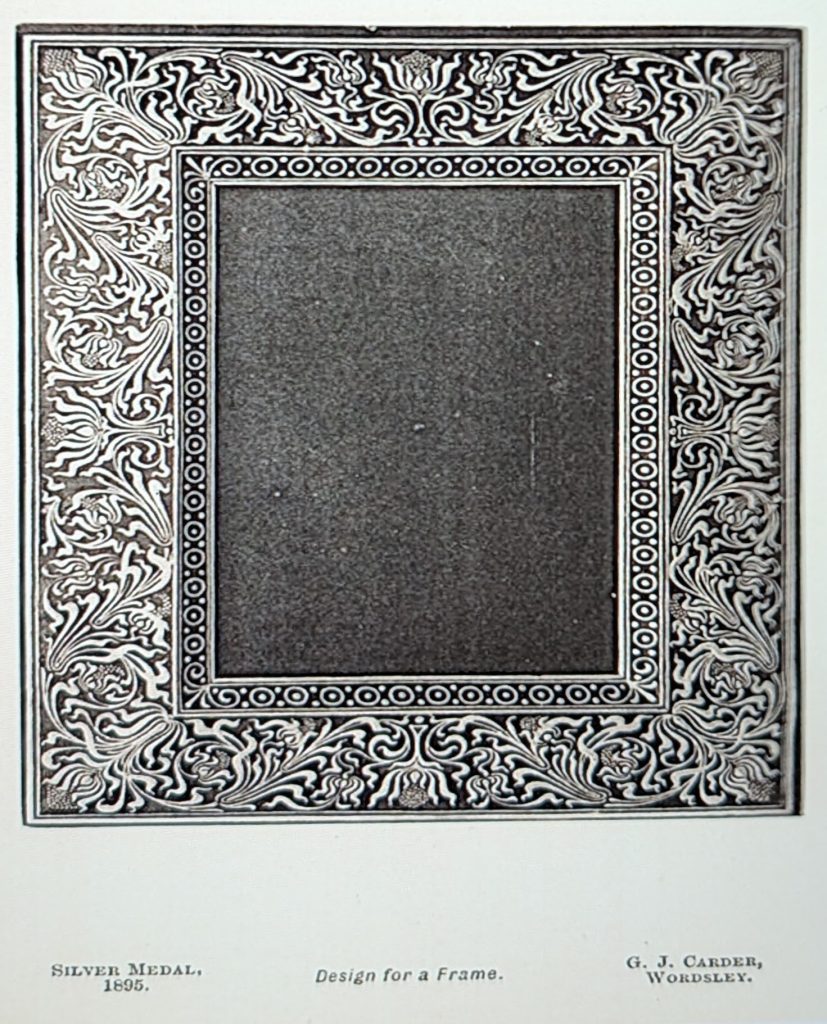
- 1895 – National Silver Medal for a frame design
- 1895 – Bronze Medal for a book cover design
- 1897 – Queen’s Prize for modeling from the antique
- 1898 – National Bronze Medal for a vase design in modeled form
James traced the evolution of the Wordsley School of Art, which began with art classes in the Brook Street School and later became the Wordsley School of Art and Technical Institute. The school underwent two expansions (in 1898 and 1907) and functioned as an educational institution until 1938, after which it became a community center. It was eventually vacated in the 1970s and later demolished between 2000 and 2001.
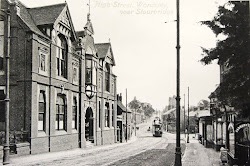
Fundraising efforts for the original school expansion began in 1892, led by a committee of prominent glass industry figures, including:
- W. O. Bowen (Manager, J&J Northwood)
- John Northwood (Art Director, Stevens & Williams)
- W. H. Stuart (Glass Manufacturer)
- W. B. Webb (Glass Manufacturer)
- T. Woodall (Cameo Glass Designer)
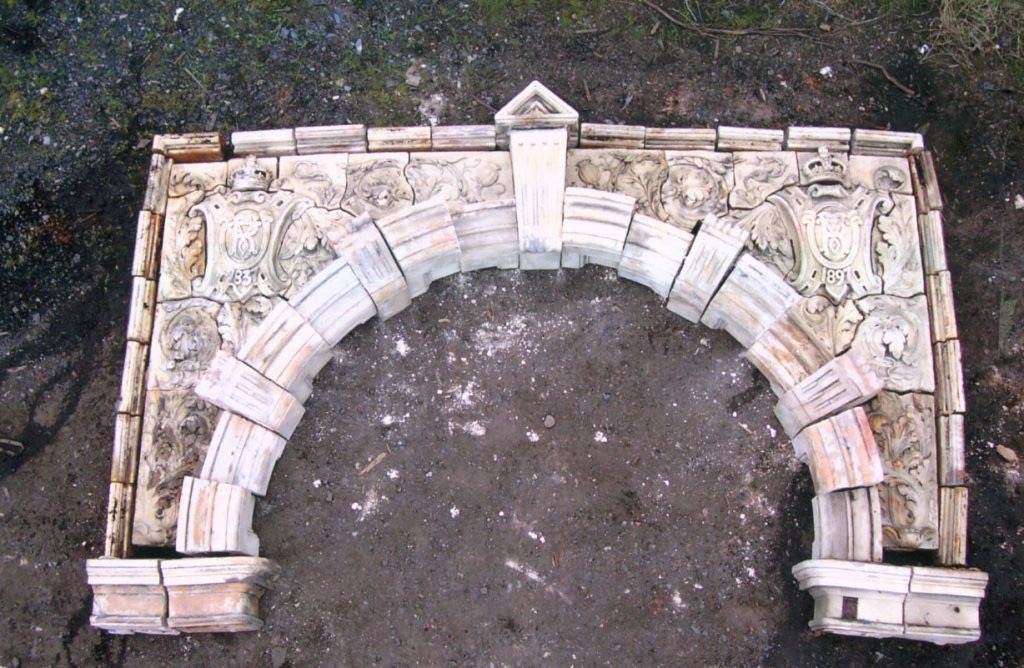
After Frederick Carder emigrated to America, George continued his involvement with and support for the Wordsley School of Art. Eventually the school building was lost, and four decorative terracotta plaques designed by Frederick Carder were stolen, and the current location of the original archway remains unknown.
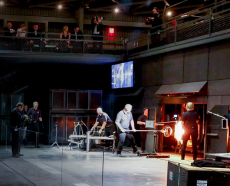
James included the recent unveiling of the Blue Vase at the Stourbridge Glass Museum. This exquisite piece, inspired by the famous Blue Naples Vase discovered in Pompeii in 1837, required over 500 hours of meticulous craftsmanship by artist Terri Colledge. The project was a collaboration of expert glass artists and serves as a testament to the continued excellence of glassmaking in the Stourbridge area. The Blue Vase is now on permanent display at the museum in Camp Hill, Wordsley.

James Measell is historian at the Fenton Art Glass Co. in Williamstown, West Virginia. During 1986-2005, he authored numerous books on American glass for The Glass Press in Marietta, Ohio. His PhD thesis on the Stourbridge School of Art 1850-1905 was awarded the Ashley Prize at the University of Birmingham in 2016. His research on various aspects of glass history has appeared in many journals, including Glass Collectors Digest, History West Midlands, and The Blackcountryman magazine. A retired university professor (Wayne State U., Detroit, MI 1970-1997), James Measell is currently an Honorary Research Fellow at the University of Birmingham, and he serves as a trustee of the British Glass Foundation/Stourbridge Glass Museum.
MORE ON THE NORTHWOOD VASE
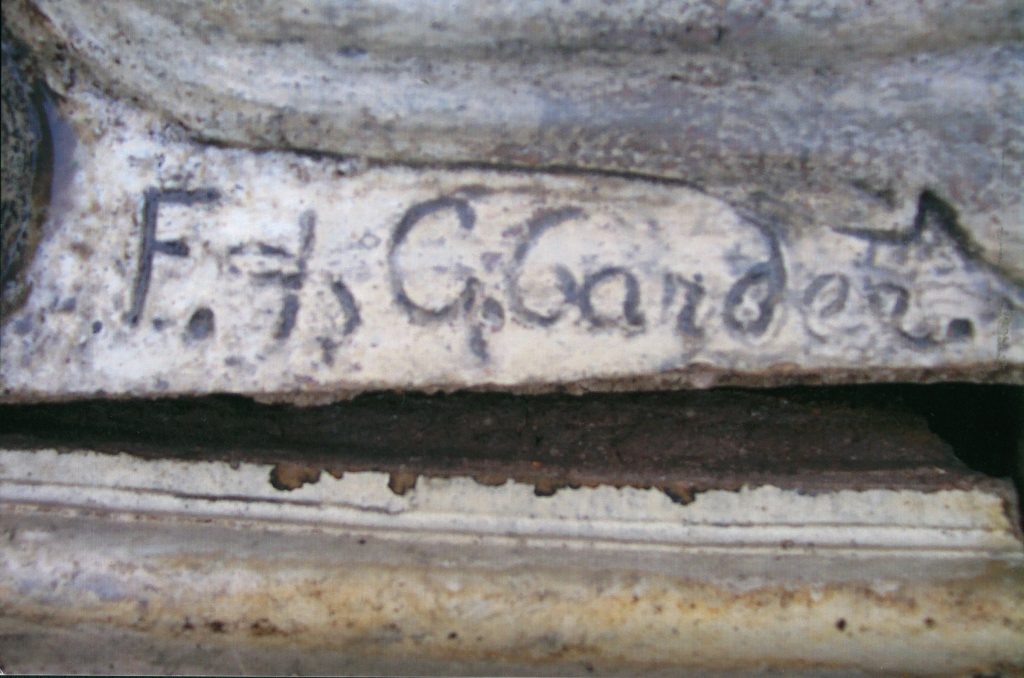
James Measell contributed a new piece of information to our ongoing Northwood vase discussion (see Issue #3777). He located a photograph of a Carder signature appearing to read “F. K. C. Carder” in the archway of the Wordsley School of Art. The signature would date to 1898–1899, as that portion of the building opened in February 1899. The photograph is from the Rakow Research Library and was donated in 2006 by an individual who worked with the demolition company when the building was taken down in 2000–2001.
James also noted that he suspects the vase dates to the mid-1890s rather than circa 1901.
Our earlier post referenced correspondence from 2007, when Jane Spillman was in communication with Alan Shovers regarding the Northwood vase as it was coming to auction. At the time, she was in a quandary, trying to determine exactly what the piece was and whether it was authentic.
Jane shared the results of her research with Alan, who published them in the March 23, 2007 Gazette. Prior to the auction, she conducted research at the Corning Museum of Glass on both the vase itself and on English silver overlay glass. The consensus was that the piece could be English; however, to the silver experts she consulted, it appeared American.
Jane also noted that Harry Northwood, son of John Northwood I, was in London from 1900 to 1901 as a representative of several American glasshouses. If Carder had wished to commission an American piece, he could have done so through Harry. Since John Northwood was 65 in 1901 and in declining health, and Carder was nominally in charge of the decorating department at that time, Jane speculated that this may have been when the vase was presented.
Perhaps someday we will uncover definitive provenance for the vase.
MEMBER ZOOM MEETING

Our next CSGA Member meeting will be on Sunday, March 22nd beginning at 3:00pm EDT. As always, this meeting is a chance to catch up with other CSGA members and enjoy talking about glass together. We will kick off the discussion by sharing some excerpts from recorded presentations that Tom Dimitroff gave a number of years ago. We’ll follow that with “Show and Tell,” a chance for our members to talk about a piece from their collection. To facilitate this sharing and ensure that we can all get a clear view of your beautiful glass, please send a photo of your item to gazette@steubenglass.org in advance of the meeting. We’ll compile the images and display them during the Zoom call.
Zoom details will be emailed to members a week before the meeting. We look forward to seeing you there!
Gazelle Gazette Archive



Carder Steuben Glass Association
18-19 September 2026